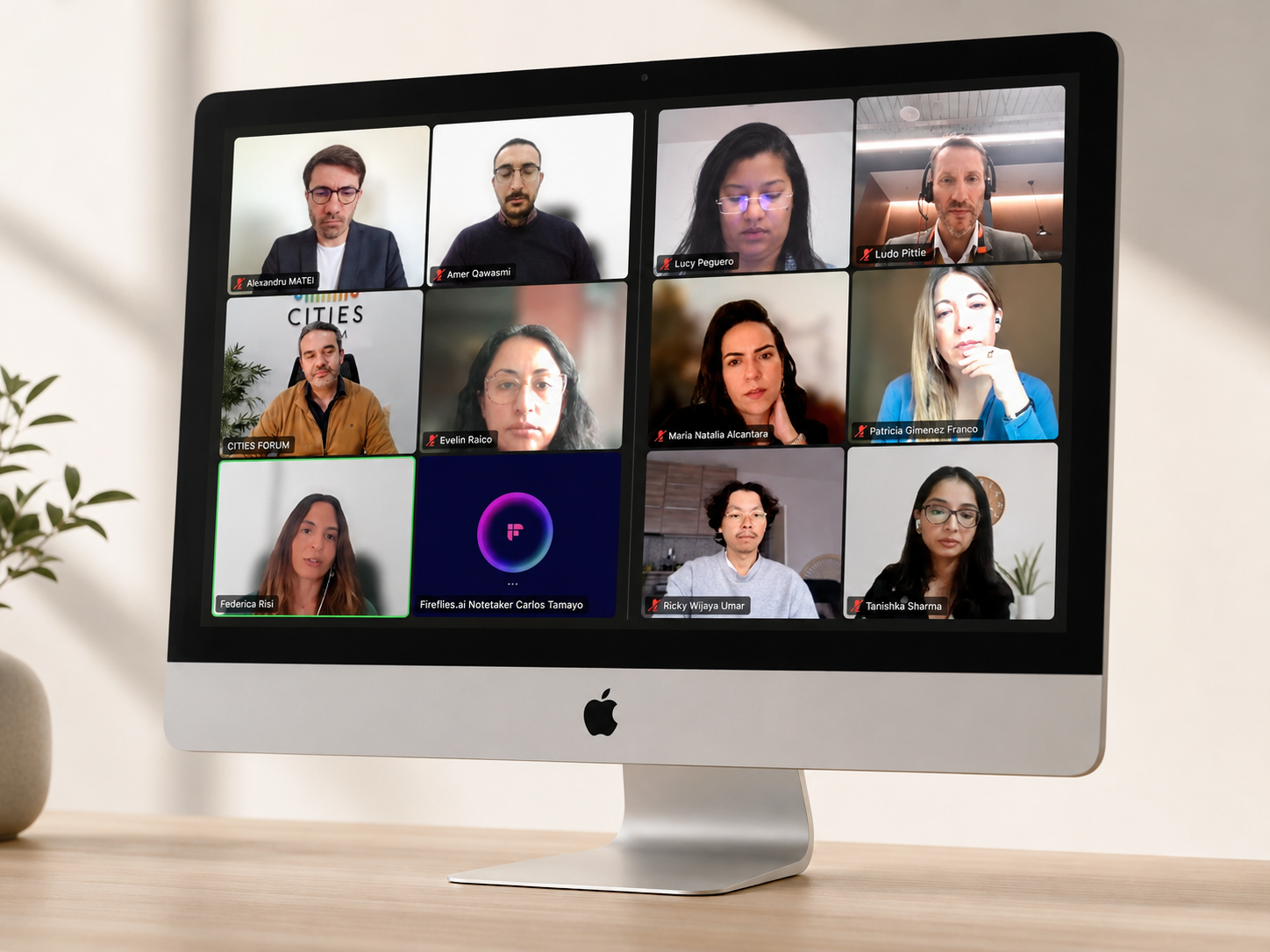
A biweekly webinar series within the International Mentoring Program — built to support the professional growth of mentees and mentors.
Every two weeks, urban planners, mentors and invited professionals meet to explore career positioning, international markets, specialization, visibility and strategic pathways.
Collective learning spaces that turn individual uncertainty into shared reflection, practical orientation and international networking.
The webinar series is one of the key pillars of the International Mentoring Program for Urban Planners. While one-to-one mentoring supports personalized guidance, these biweekly sessions create a shared intellectual and professional space for the whole community.
Each webinar focuses on a specific challenge faced by urban planners who want to reposition their careers, access international opportunities, identify high-value niches, become more visible or better understand the structural realities of different career pathways.
The format combines expert moderation, guided discussion and open debate allowing mentees and mentors to exchange perspectives across countries, sectors and professional backgrounds.
From individual uncertainty to shared reflection, practical orientation and international networking.
Each session moves around these four ideas, woven into every debate.
Helping participants understand where they fit within the urban planning ecosystem.
Providing insight into different professional environments, hiring logics and career pathways.
Creating opportunities for mentors and mentees to learn from each other beyond one-to-one sessions.
Supporting participants in building credibility, positioning and presence in global urban networks.
From March to May 2026, the programme unfolds biweekly across eight sessions, each building on the previous one.
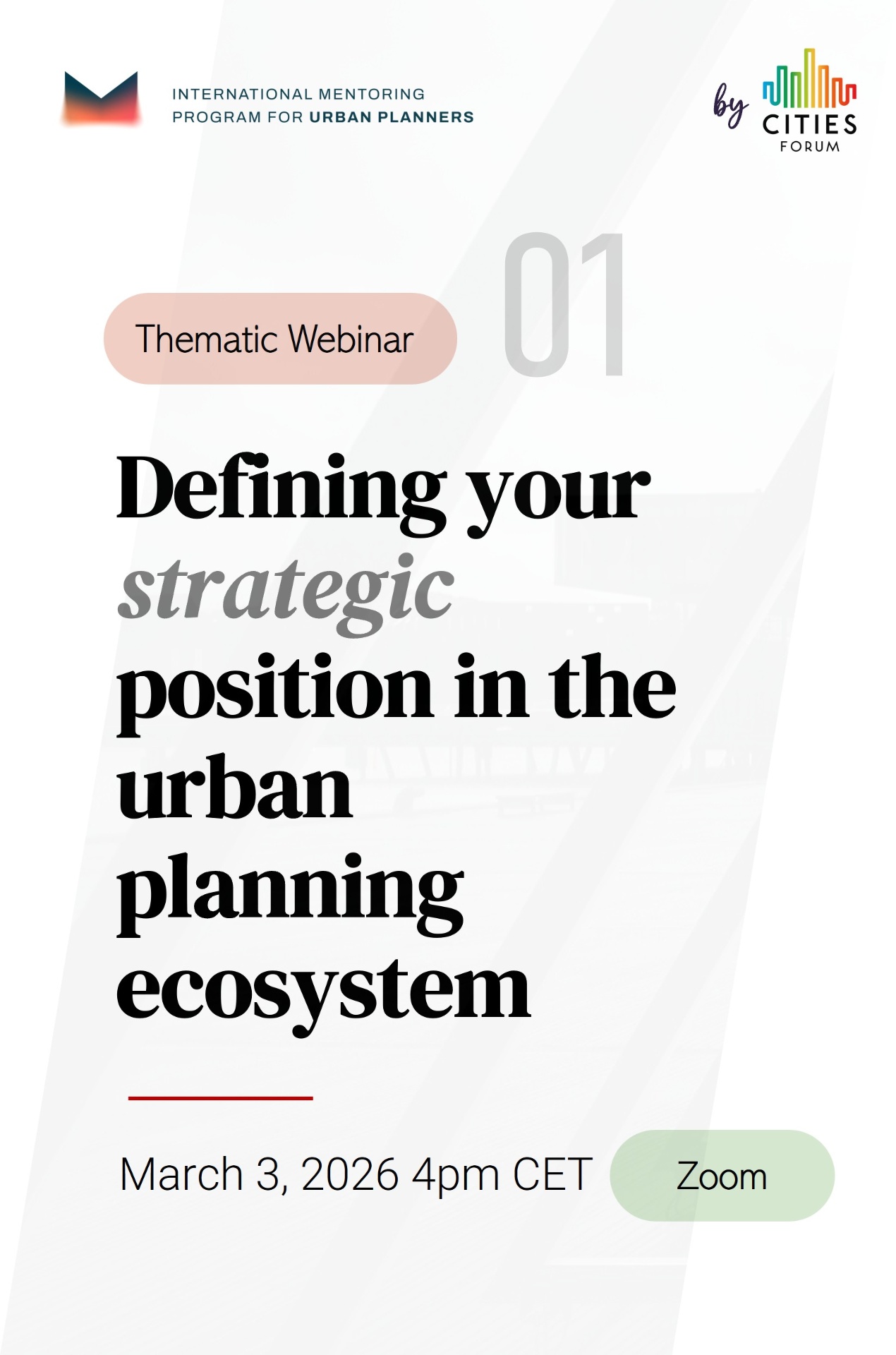
This webinar helps participants move from vague professional identity to precise strategic positioning. The session maps the contemporary urban planning ecosystem across public institutions, private firms, multilateral agencies, NGOs, research environments and hybrid models. Participants reflect on where influence, funding, innovation and implementation power actually sit, and identify where their experience creates the strongest leverage.
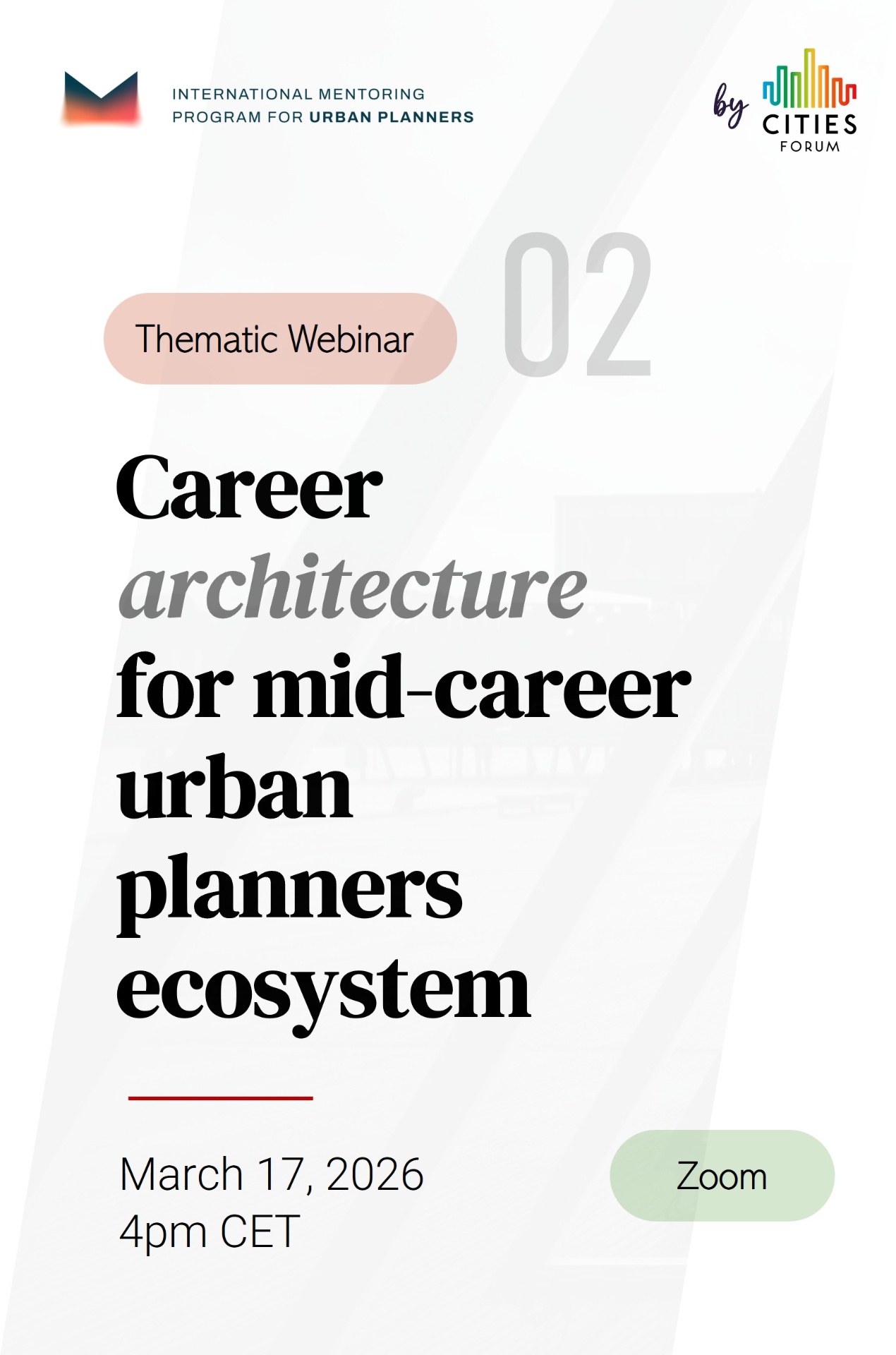
This session introduces career architecture as a way to design a deliberate five-year professional trajectory instead of drifting reactively. Participants assess accumulated capital, including skills, networks, credibility and geography, and define future positioning goals aligned with global demand trends.
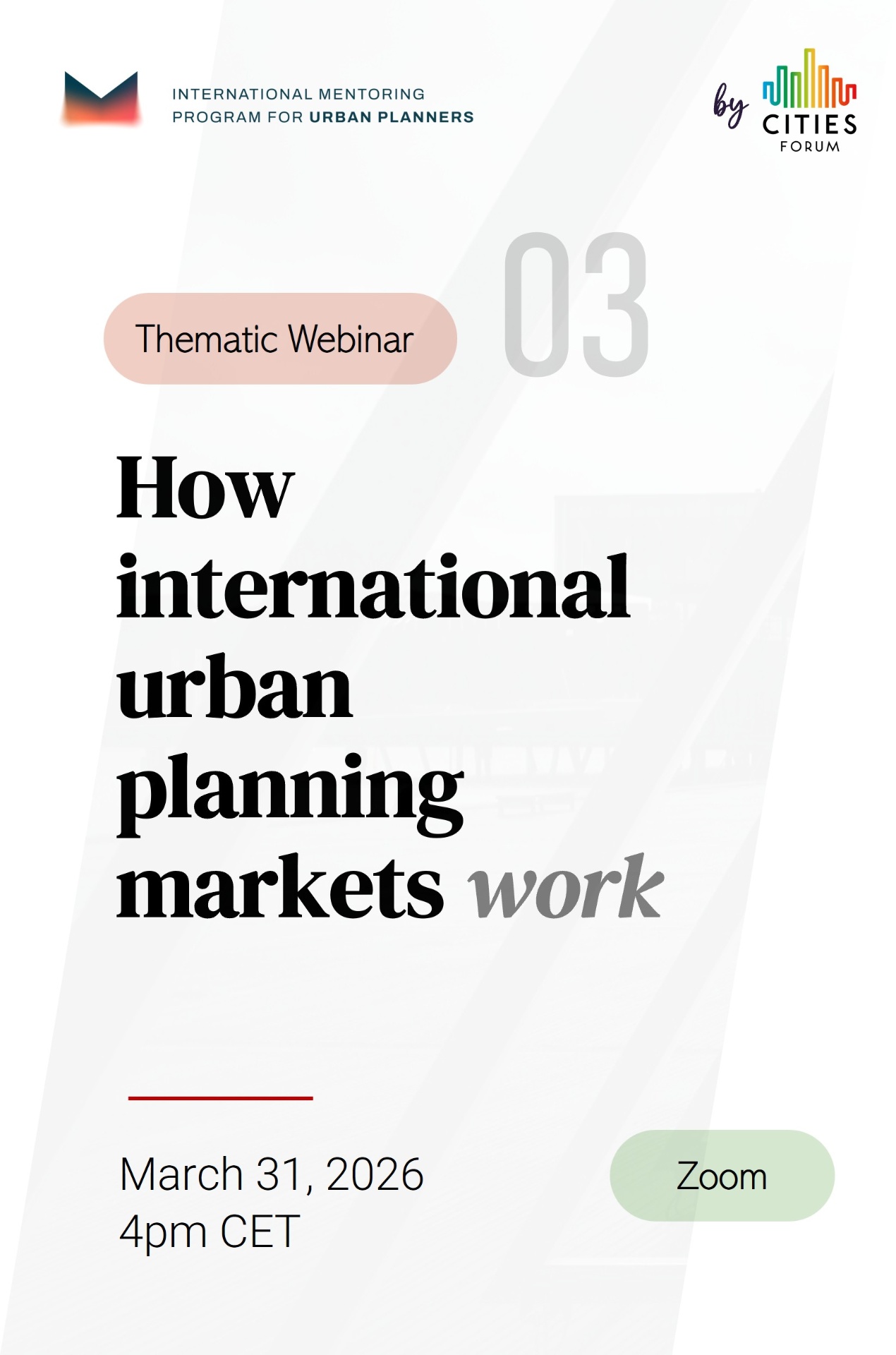
This webinar analyzes structural differences between European consultancy ecosystems, North American planning environments, Asian urban development contexts and multilateral project markets. Participants learn how to decode market signals, understand implicit recruitment criteria and adapt their profiles accordingly.
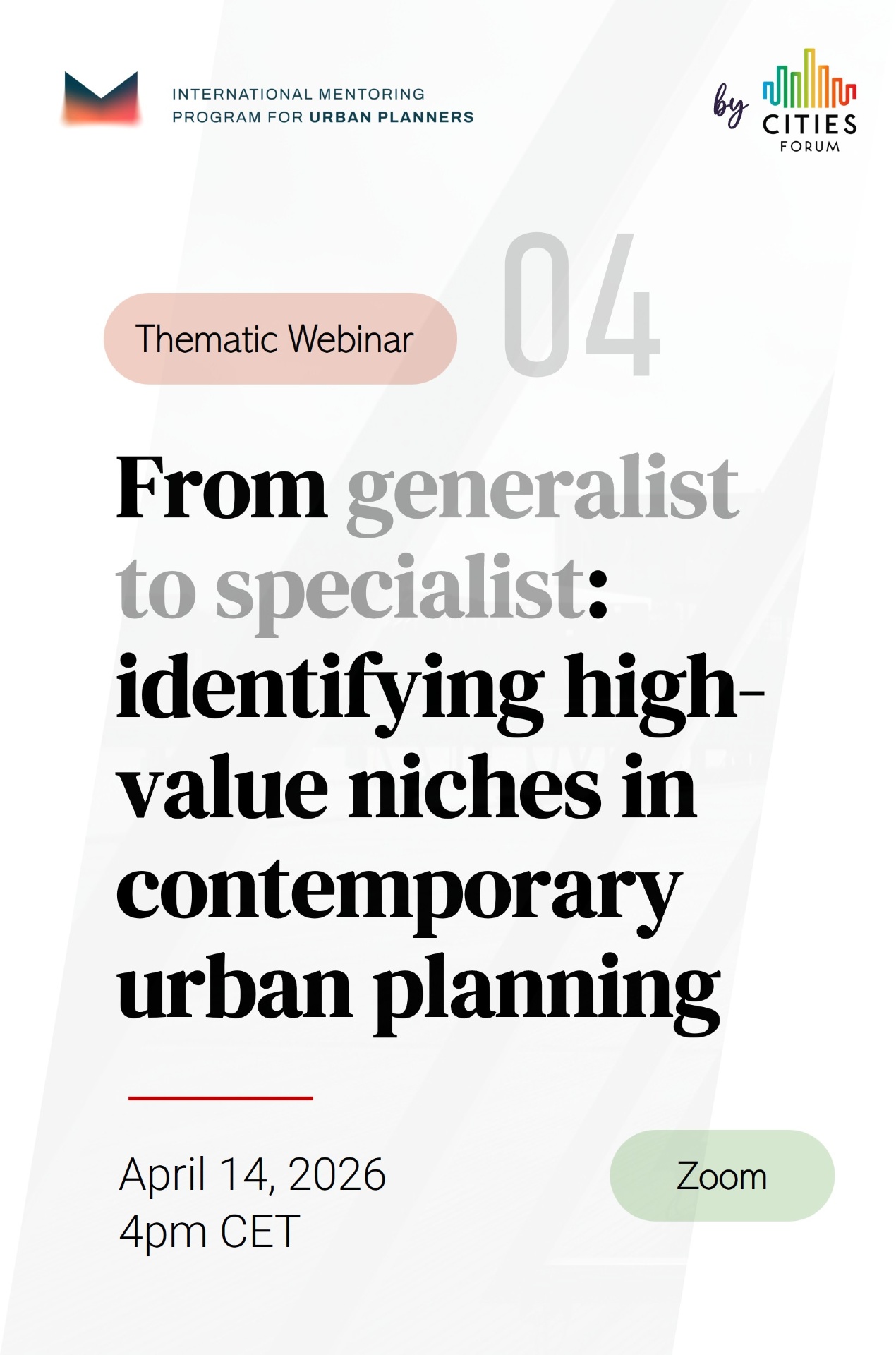
This session explores how to transform broad experience into strategic differentiation. It focuses on high-demand niches such as climate adaptation, mobility systems, digital urbanism, governance innovation and urban finance. Participants identify potential niche pathways and criteria for evaluating their long-term strategic value.
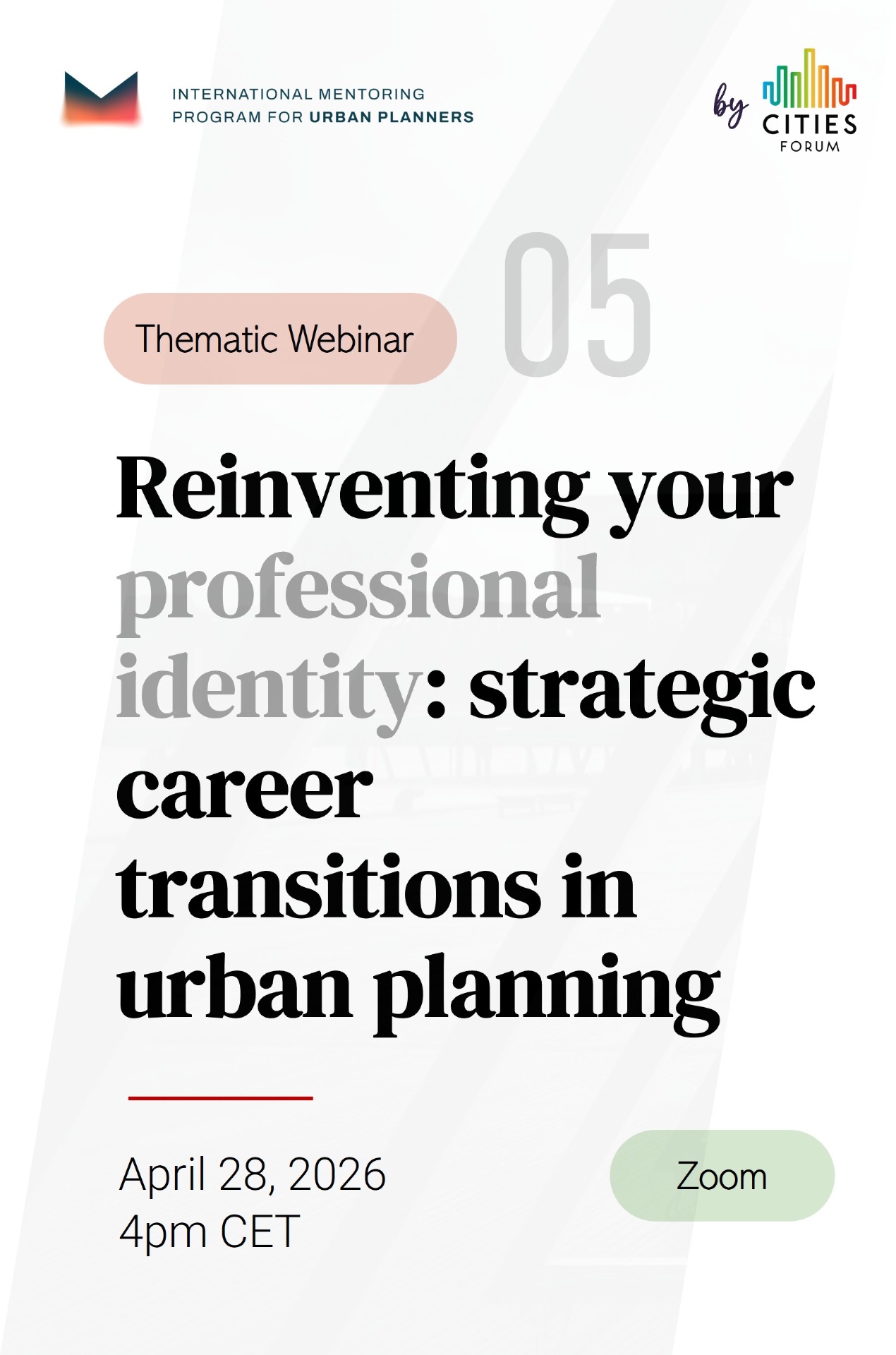
This webinar explores how to pivot without erasing accumulated credibility. Participants learn how to reframe past experience, translate transferable skills and construct a coherent narrative that supports repositioning. The session introduces a structured transition model based on deconstruction, repositioning, testing and consolidation.
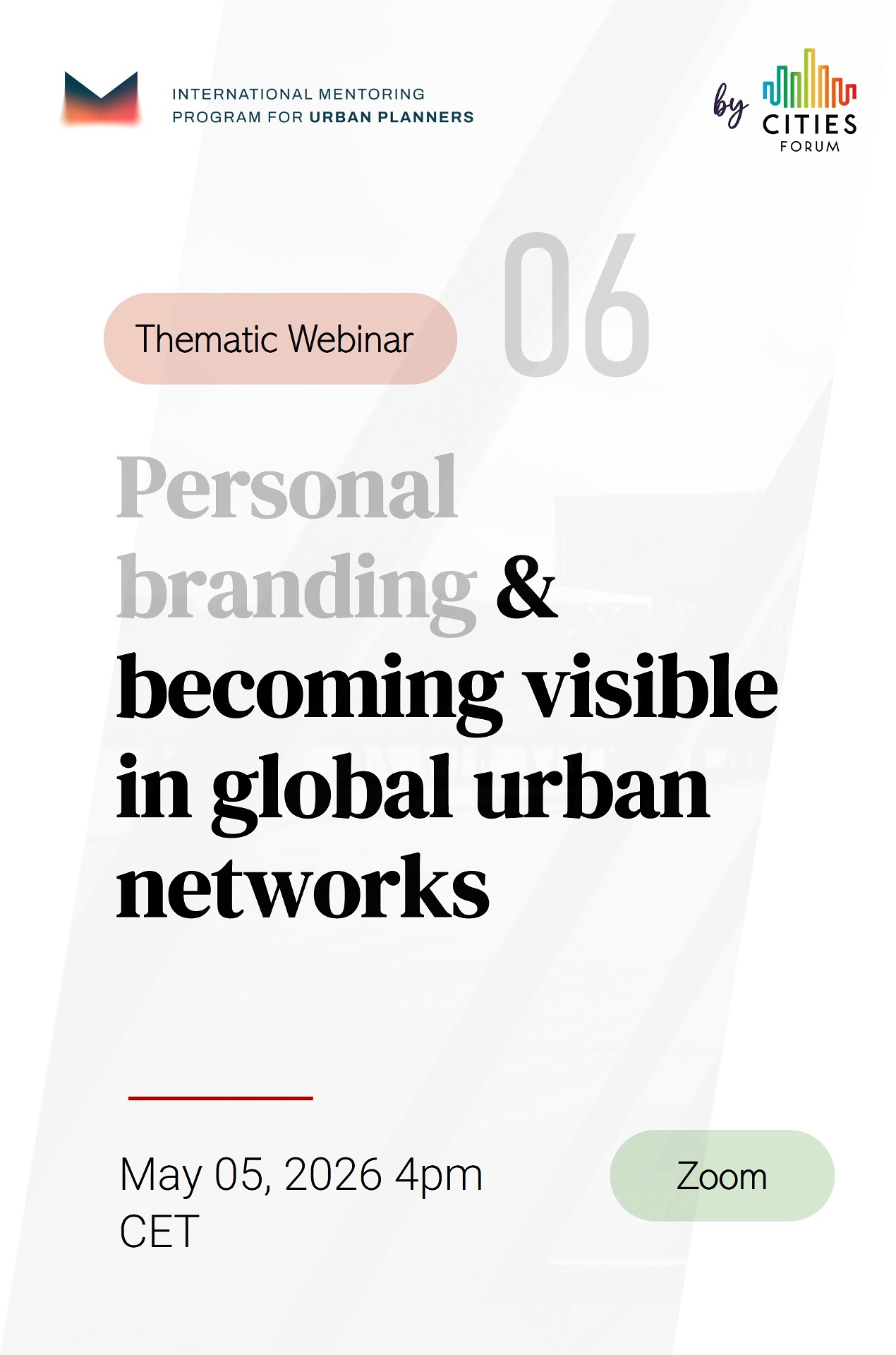
This webinar examines how recognition is built within global urban networks through conferences, publications, collaborative projects and digital platforms. Participants learn how to position expertise clearly, select the right forums for exposure and communicate value effectively.
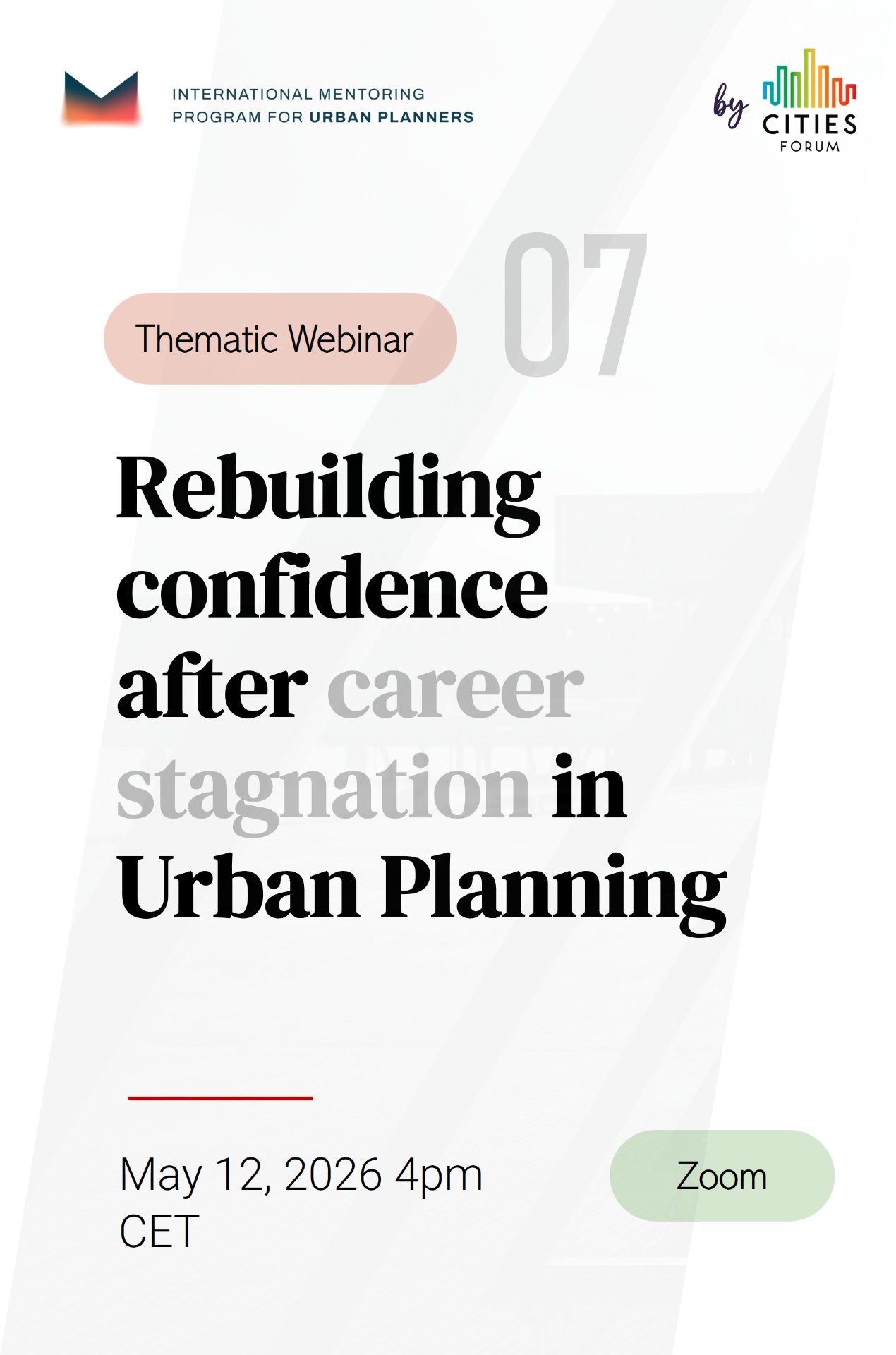
This session addresses the psychological and strategic dimensions of feeling stuck. Participants examine common mid-career plateaus such as under-recognition, limited mobility and identity fatigue. The webinar introduces momentum-building strategies including small strategic wins, targeted skill reinforcement and network recalibration.
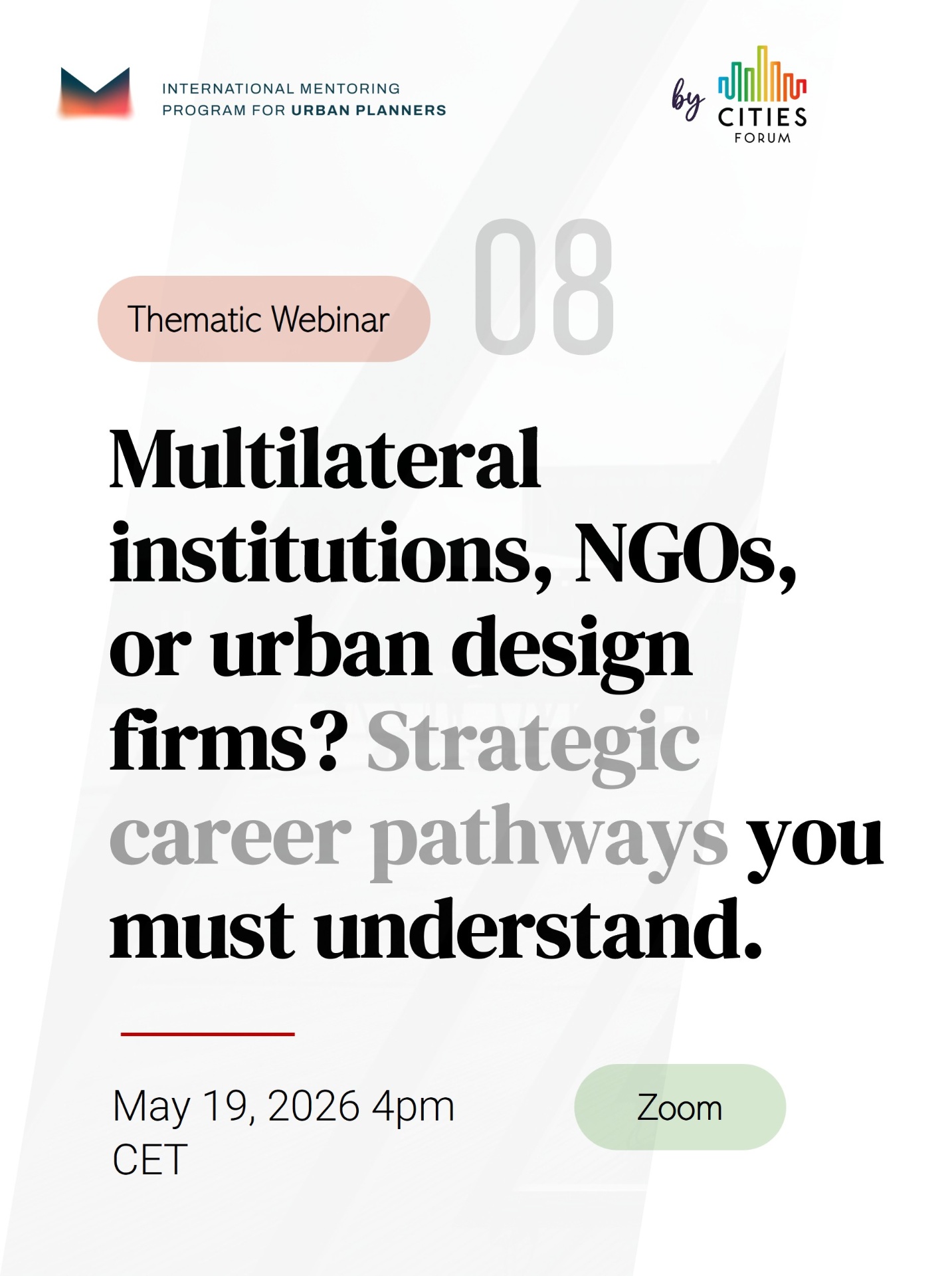
This webinar compares multilateral institutions, international NGOs and private urban design or engineering firms across governance structures, funding cycles, decision-making hierarchies, accountability mechanisms and career progression patterns. The objective is to help participants make informed strategic choices based on personal fit and structural realities.
Together, these webinars create a shared learning journey for the mentoring community. They help participants move from fragmented career concerns to a clearer understanding of their professional positioning, strategic options and long-term development pathways.