Methodology

How the mentoring journey works

A structured yet personalised journey to help urban planners gain clarity, confidence and international agency.

Not a course

A guided journey: 1:1 mentoring, collective learning, digital content and global networking.

Personalised

Each mentee follows their own pathway within a shared framework that gives rhythm and continuity.

Outcome

Move from uncertainty to clearer positioning and a more intentional career strategy.

01 Context

Urban planning careers are changing. Professional development must change too.

Urban planning careers are no longer linear, nationally bounded or defined only by technical expertise. Today's urban professionals operate in a global, highly competitive environment shaped by climate change, digital transformation, housing pressure, mobility transitions, social inequality, governance challenges and new forms of public–private collaboration.

Many urban planners have strong technical skills but lack structured support to navigate career choices, international opportunities, specialisation, visibility and long-term positioning. This programme was created to respond to that gap.


Infographic

From technical competence to strategic career development

Step 1
Technical Expertise
Step 2
Career Clarity
Step 3
Strategic Positioning
Step 4
Global Visibility
Step 5
Professional Agency
02 Diagnosis

The programme is built around five professional development gaps

The methodology starts from a clear diagnosis: many career challenges faced by urban planners are not caused by lack of talent, but by structural gaps in how professional development is supported after formal education.

The five gaps

01

Education–career disconnect

Strong academic and technical training does not always translate into a clear career strategy. Many professionals know what they can do, but not where they should position themselves.

02

Lack of structured mentorship

Career decisions are often made in isolation or through informal advice. The programme gives mentees access to experienced professionals who have navigated similar transitions.

03

Fragmented professional identity

Urban planning now spans climate, mobility, digital urbanism, governance, participation and data. Mentees are supported in defining a clearer identity within this evolving ecosystem.

04

Limited global orientation

Many planners understand their national context but have limited exposure to international labour markets, institutions, professional cultures and transnational networks.

05

Lack of continuous career support

Professional development is often treated as a one-off moment. The programme creates structured moments for reflection, recalibration and strategic decision-making over time.

03 Journey

A structured journey, not a fixed curriculum

Participants do not move through a rigid syllabus. They combine individual mentoring, thematic content, webinars and community interaction according to their own professional priorities. The journey gives each mentee a clear rhythm while preserving flexibility for personalised development.

The mentee learning journey

  1. 01 Phase

    Onboarding and orientation

    Mentees are introduced to the programme structure, tools, expectations and available learning formats. This phase helps participants understand how to engage and how to take ownership of their journey.

    • Programme introduction
    • Tools and platform orientation
    • Roles and expectations
    • Initial alignment of objectives
    1
  2. 02 Phase

    Discovery and clarification

    Mentees reflect on their professional context, current challenges and career priorities. The objective is to move from broad aspirations to clearer mentoring goals.

    • Exploration of career situation
    • Identification of priority challenges
    • Clarification of mentoring focus
    • Initial roadmap definition
    2
  3. 03 Phase

    Active mentoring and strategic development

    The core phase. Mentees engage in one-to-one mentoring, attend thematic webinars, access digital content and interact with the community. Insights are tested, refined and translated into concrete decisions.

    • One-to-one mentoring sessions
    • Application to real situations
    • Webinars and collective reflection
    • Ongoing adjustment of focus
    3
  4. 04 Phase

    Consolidation and transition

    Mentees synthesise what they have learned, reassess their professional positioning and define next steps beyond the formal programme.

    • Learning synthesis
    • Reassessment of positioning
    • Future priorities
    • Transition to autonomous development
    4
04 Experience

The programme combines five learning formats

The mentoring experience is built through multiple formats. Each one plays a different role, but together they create a coherent learning ecosystem.

Individual

One-to-one mentoring

Individual mentoring is the core of the programme. Mentees meet experienced professionals in confidential, focused sessions designed to support reflection, strategic decision-making and practical next steps.

One-to-one mentoring video call between mentor and mentee
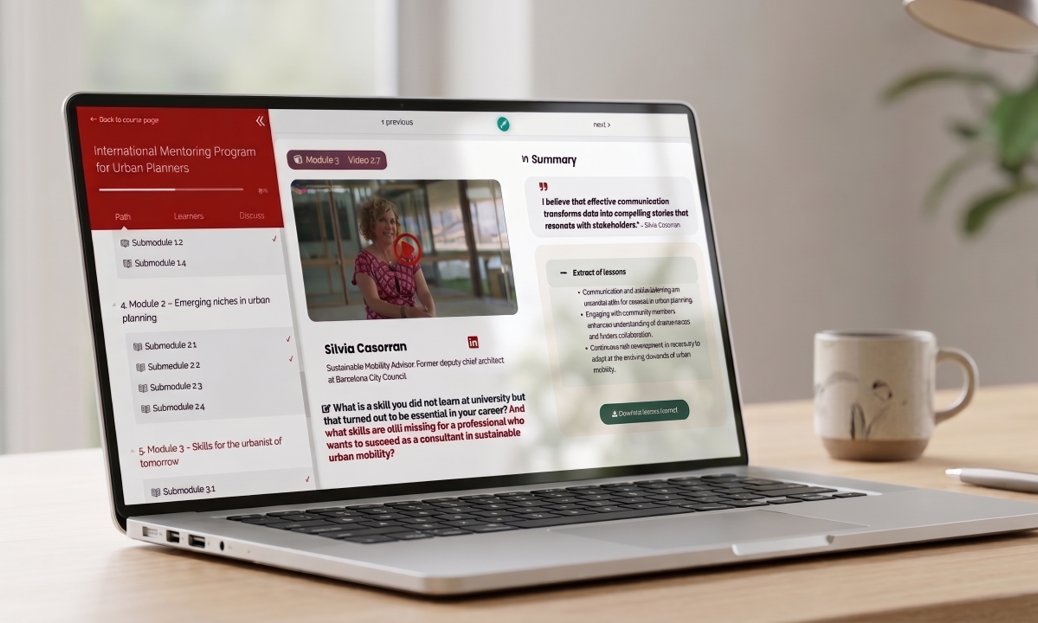
Laptop showing the International Mentoring Program for Urban Planners course platform
Flexible

Asynchronous digital content

The platform provides curated audiovisual content, methodological resources and strategic materials that mentees can explore at their own pace.

Collective

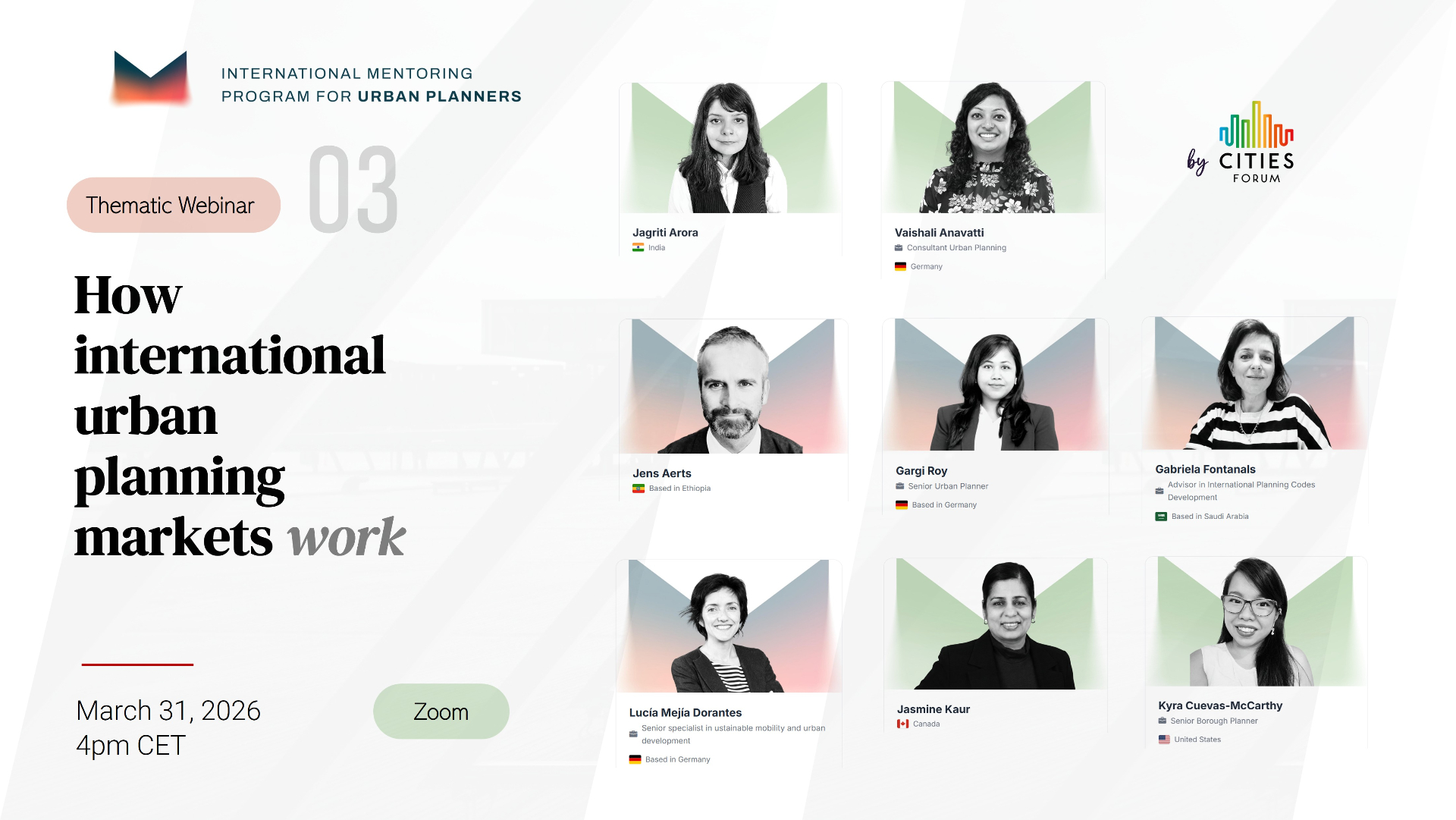
Transversal thematic webinars

Mentors and mentees discuss key professional challenges affecting urban planners across sectors, geographies and career stages.

Thematic webinar 03 How international urban planning markets work, featuring mentors and mentees
Community

Community building

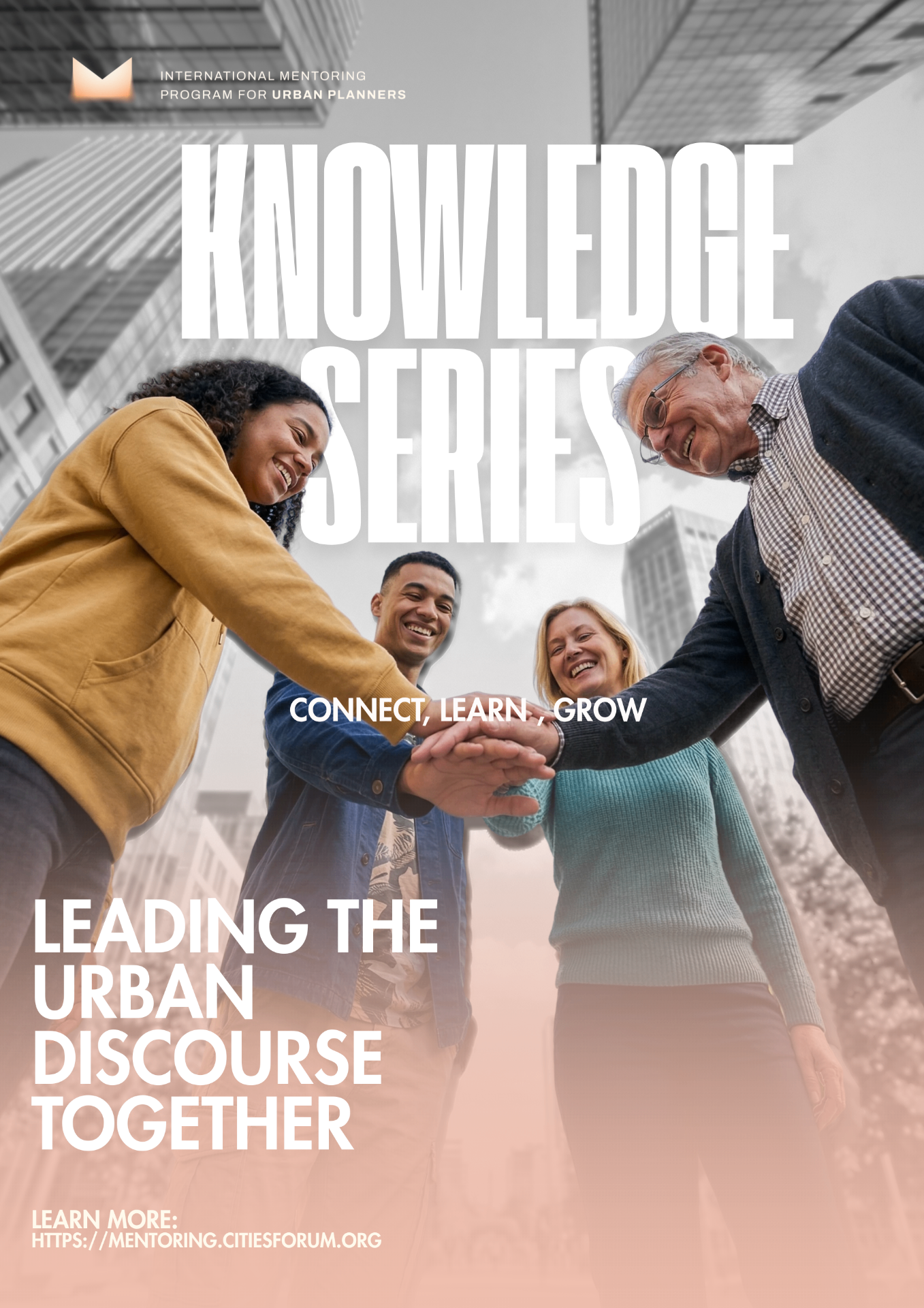
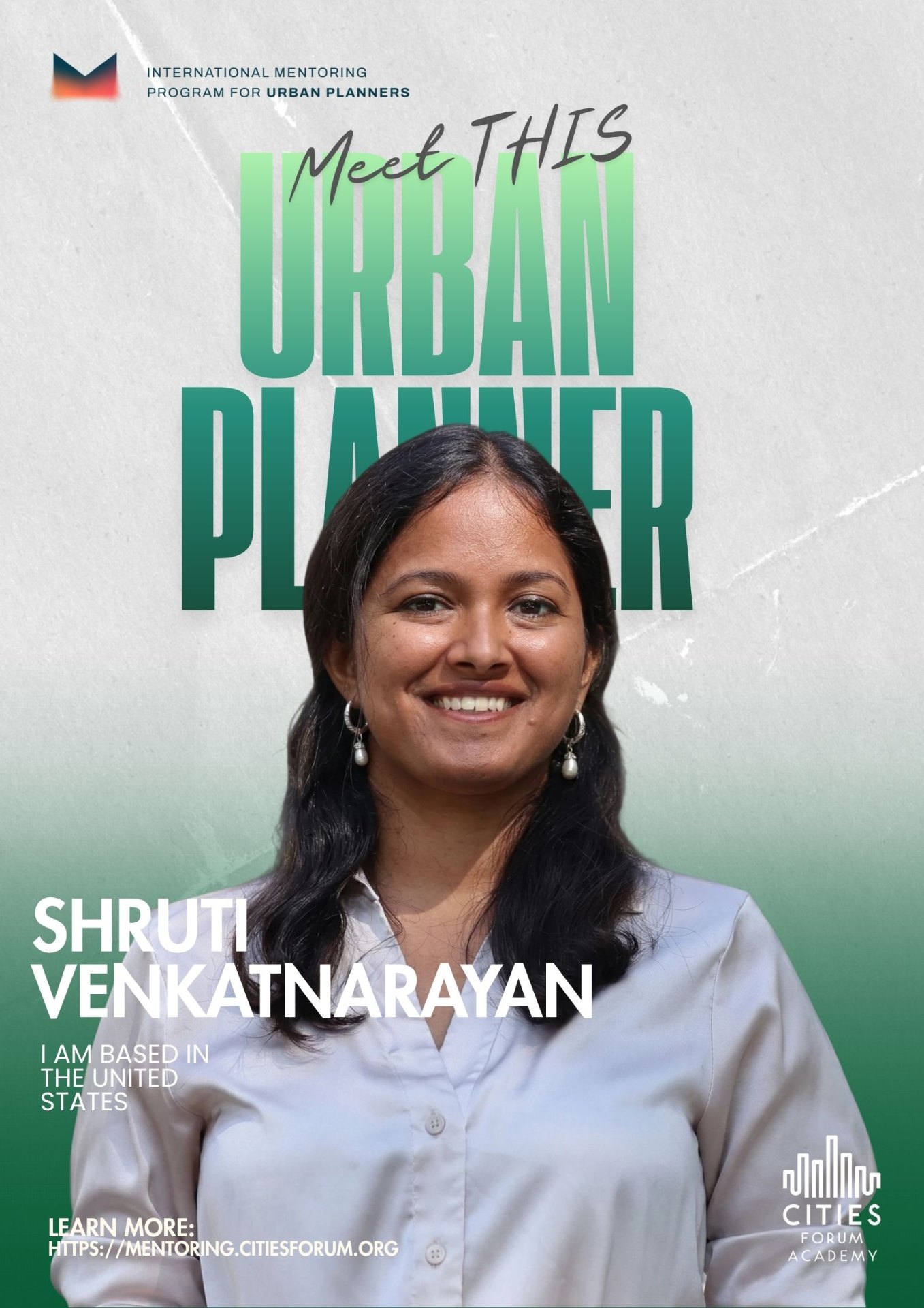
We foster collaboration across the community through initiatives such as the "Mentorship Knowledge Series", while helping mentees grow their visibility and expand their networks through actions like "Meet this Urban Planner", all under the CITIES FORUM brand.

In-person

In-person experiences

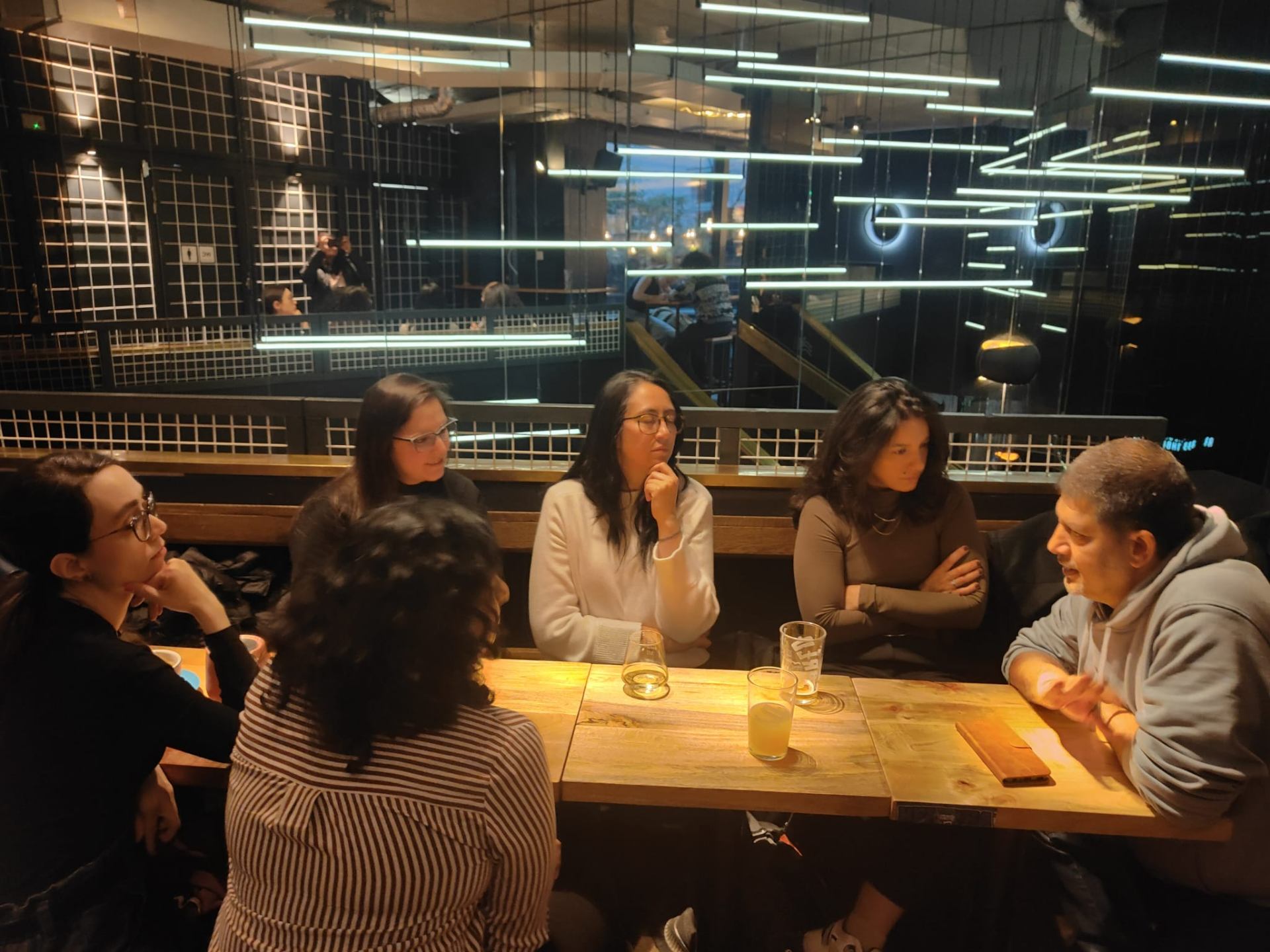
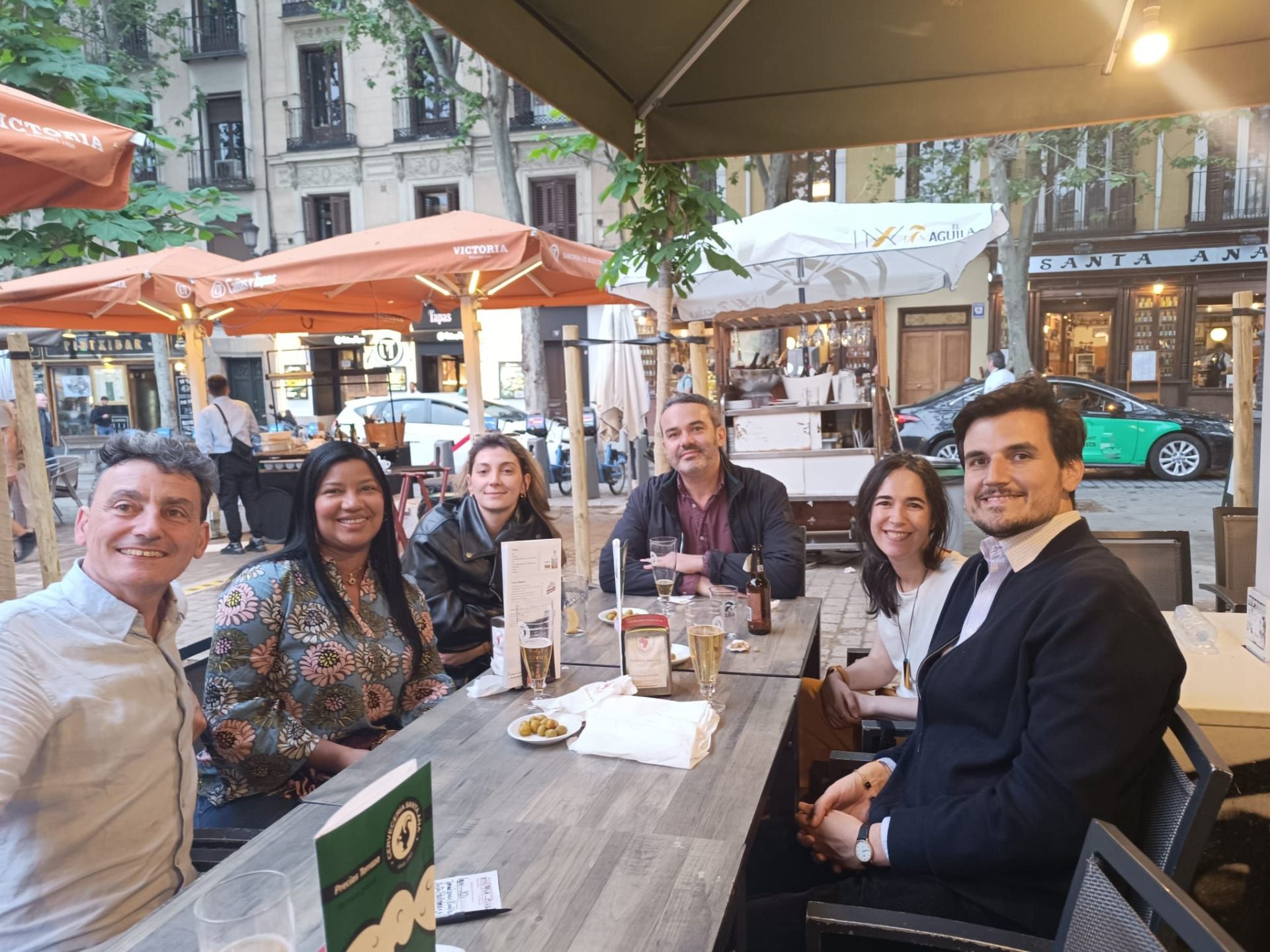
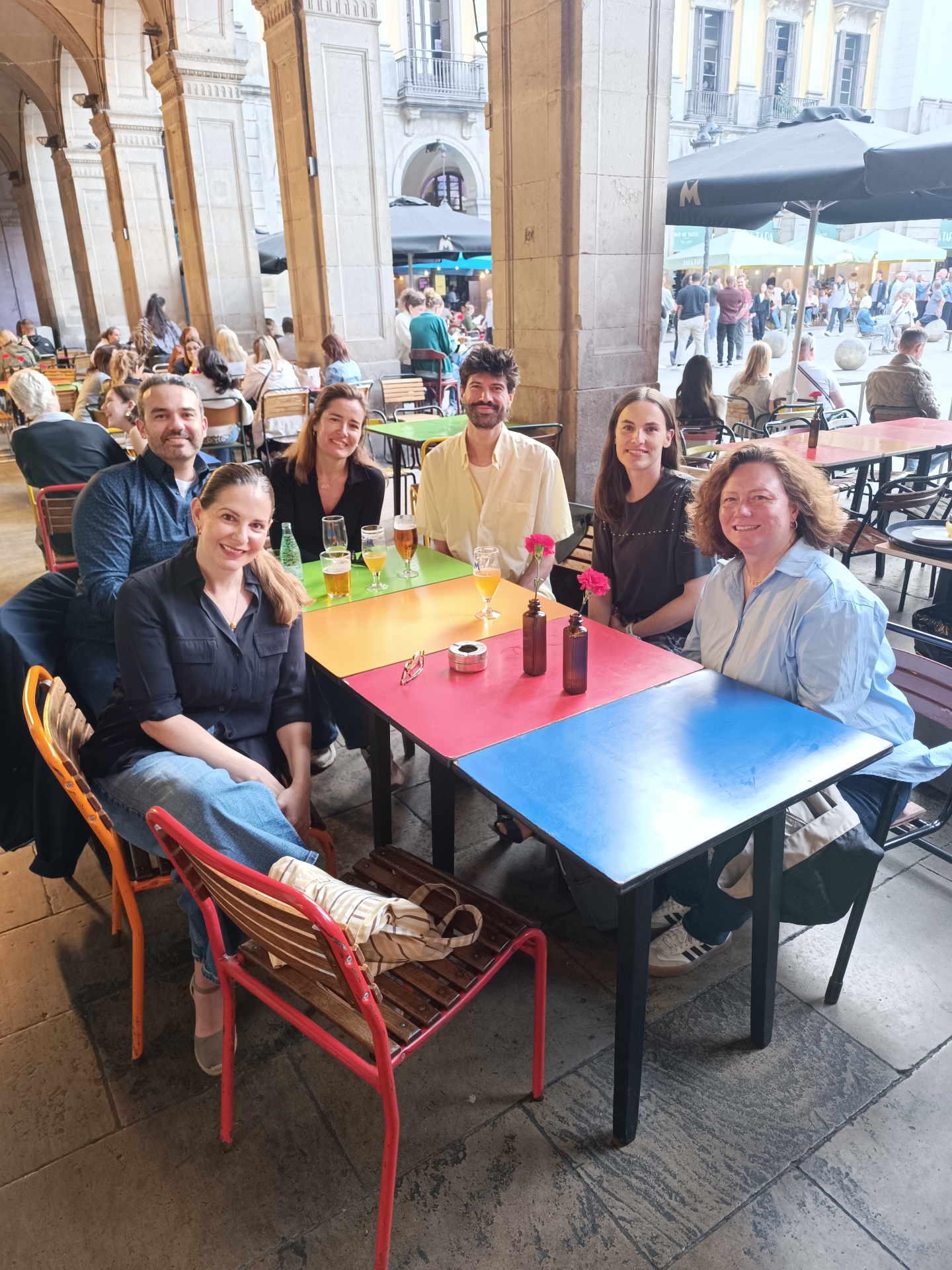
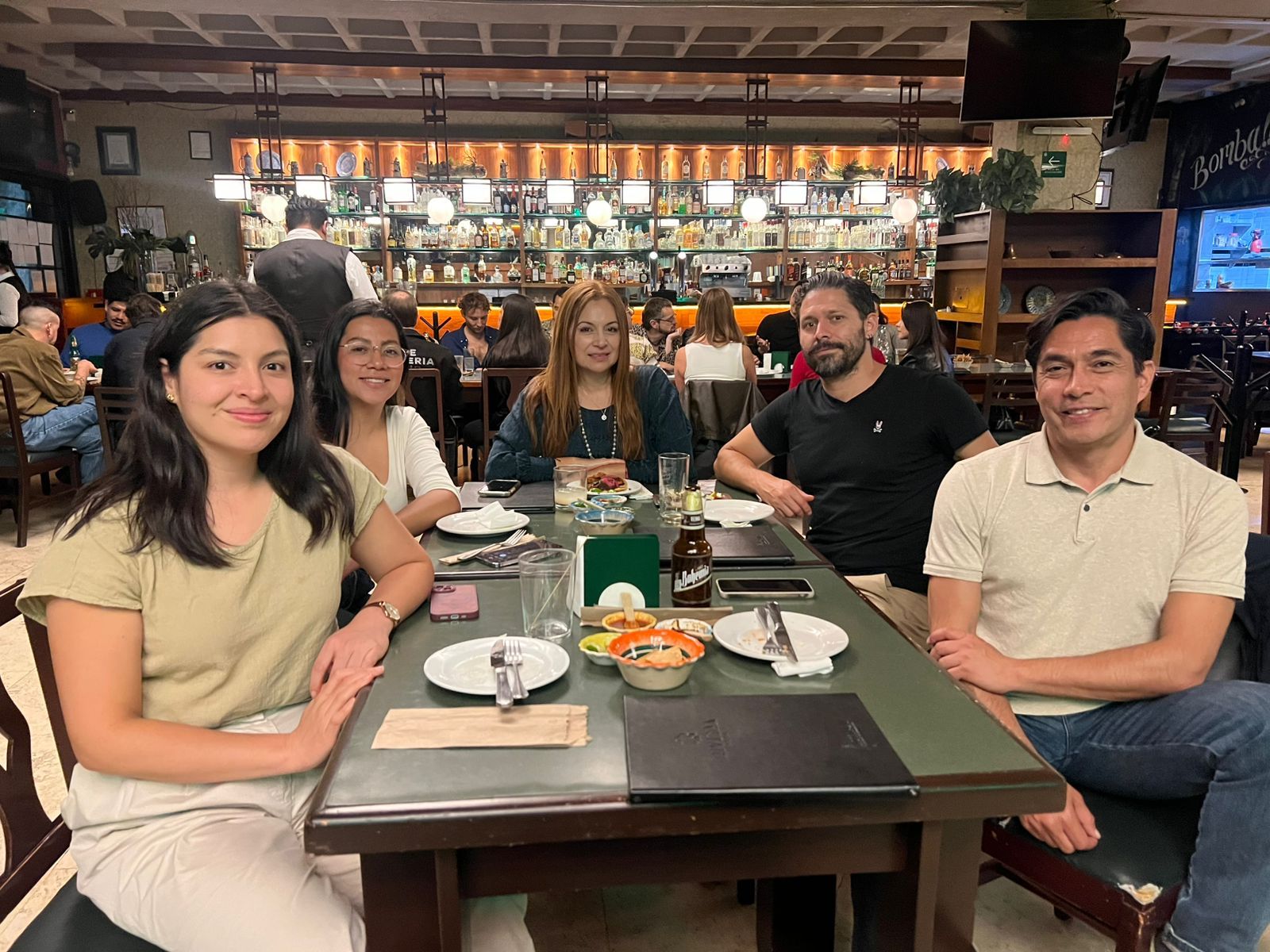
High-impact in-person moments, including the final technical encounter in Madrid and informal gatherings linked to international urban events.

Mentoring meet-up in Berlin
Berlin
Mentoring meet-up in Madrid
Madrid
Mentoring meet-up in Barcelona
Barcelona
Mentoring meet-up in Mexico City
Mexico City
Mentoring meet-up in Rotterdam
Rotterdam
05 Personalisation

A personalised roadmap for each mentee

Some mentees enter the programme looking for clarity. Others are seeking internationalisation, strategic repositioning, confidence after stagnation, specialisation or access to new professional ecosystems.

Personalisation is built into the methodology. Each mentee selects mentors, prepares sessions, reflects on outcomes and adjusts priorities as new insights emerge — a roadmap that evolves with the participant.

A note on personalisation. Personalisation does not mean isolation. Each mentee follows an individual pathway while remaining connected to the collective learning experience of the programme.
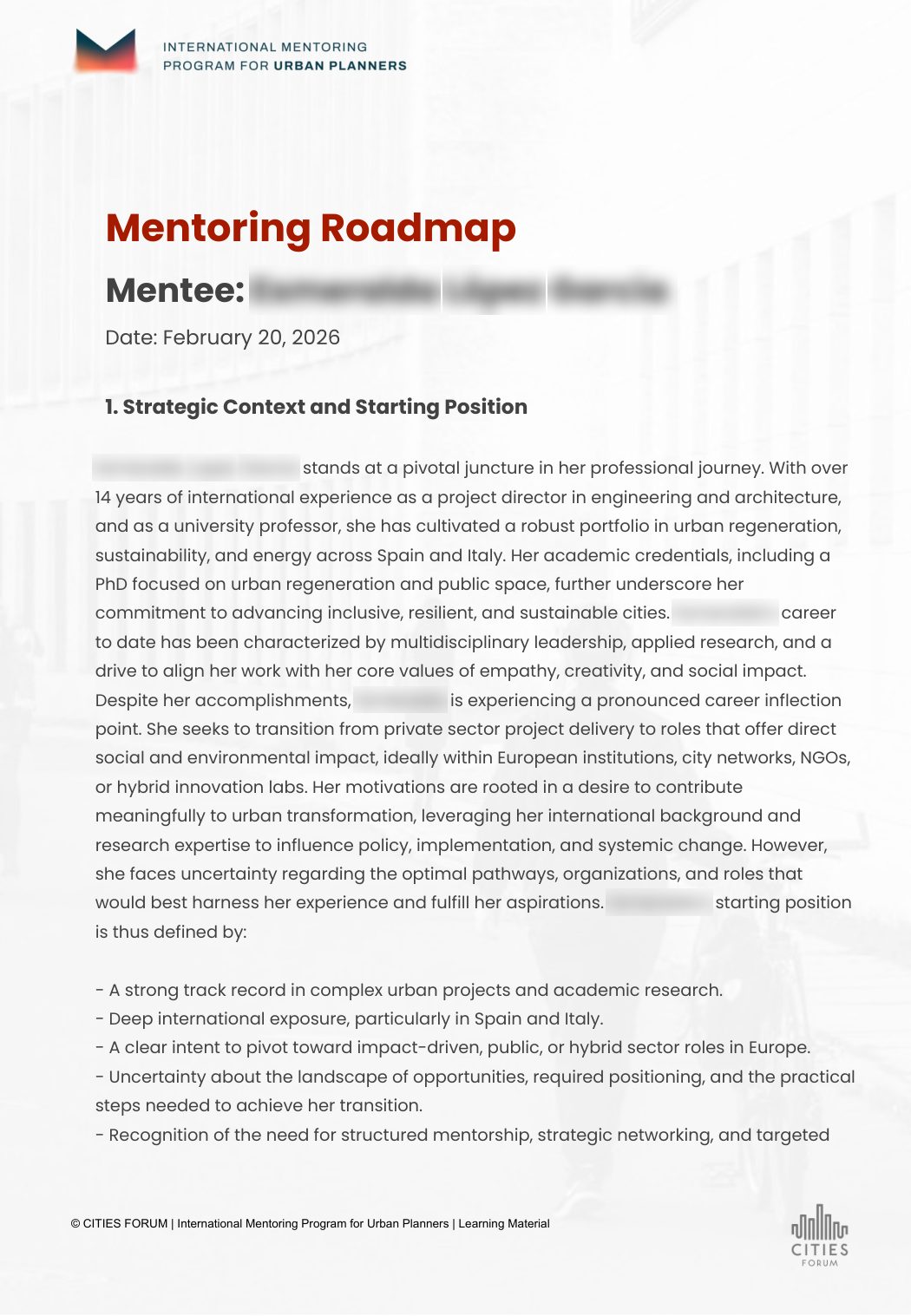
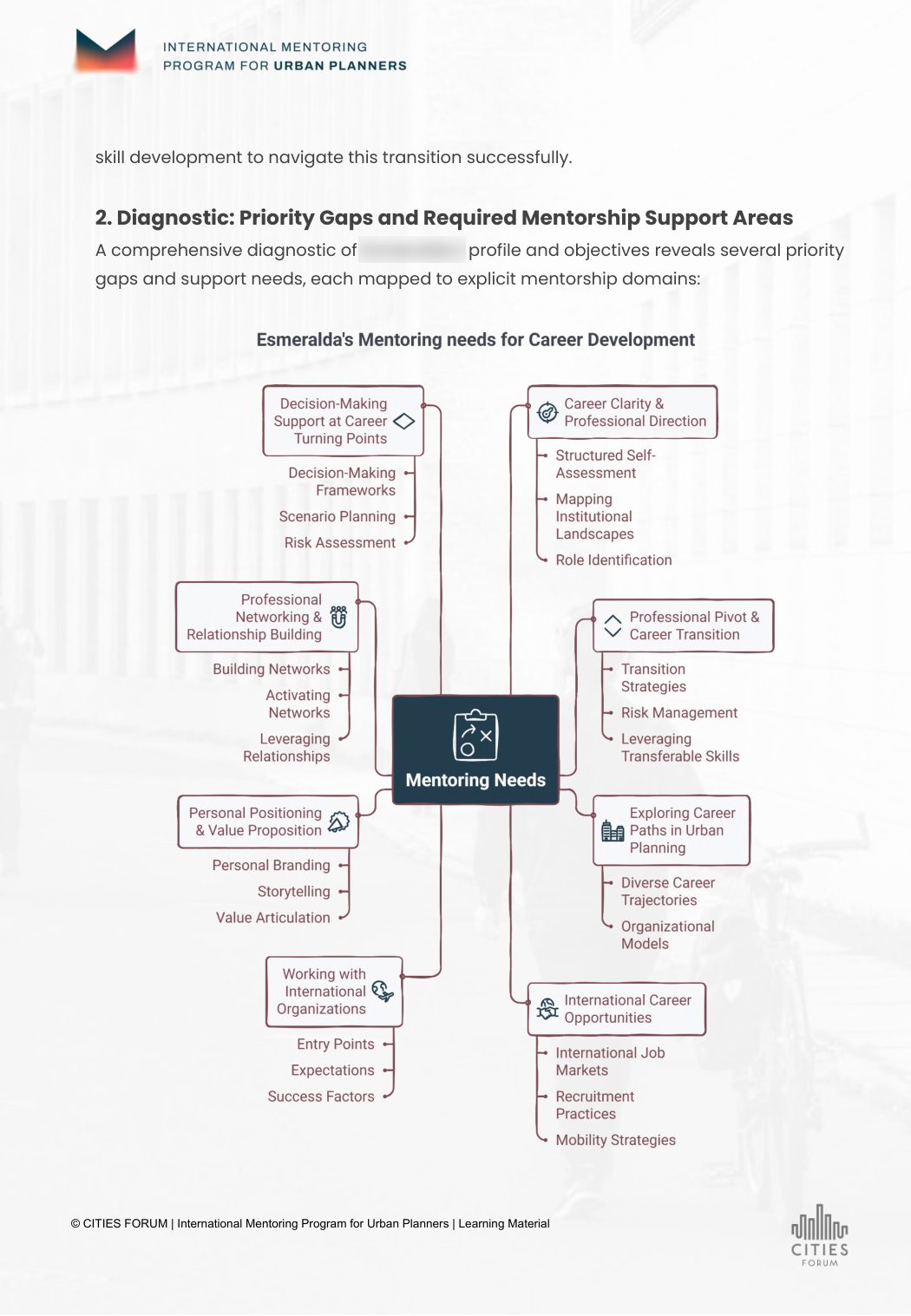
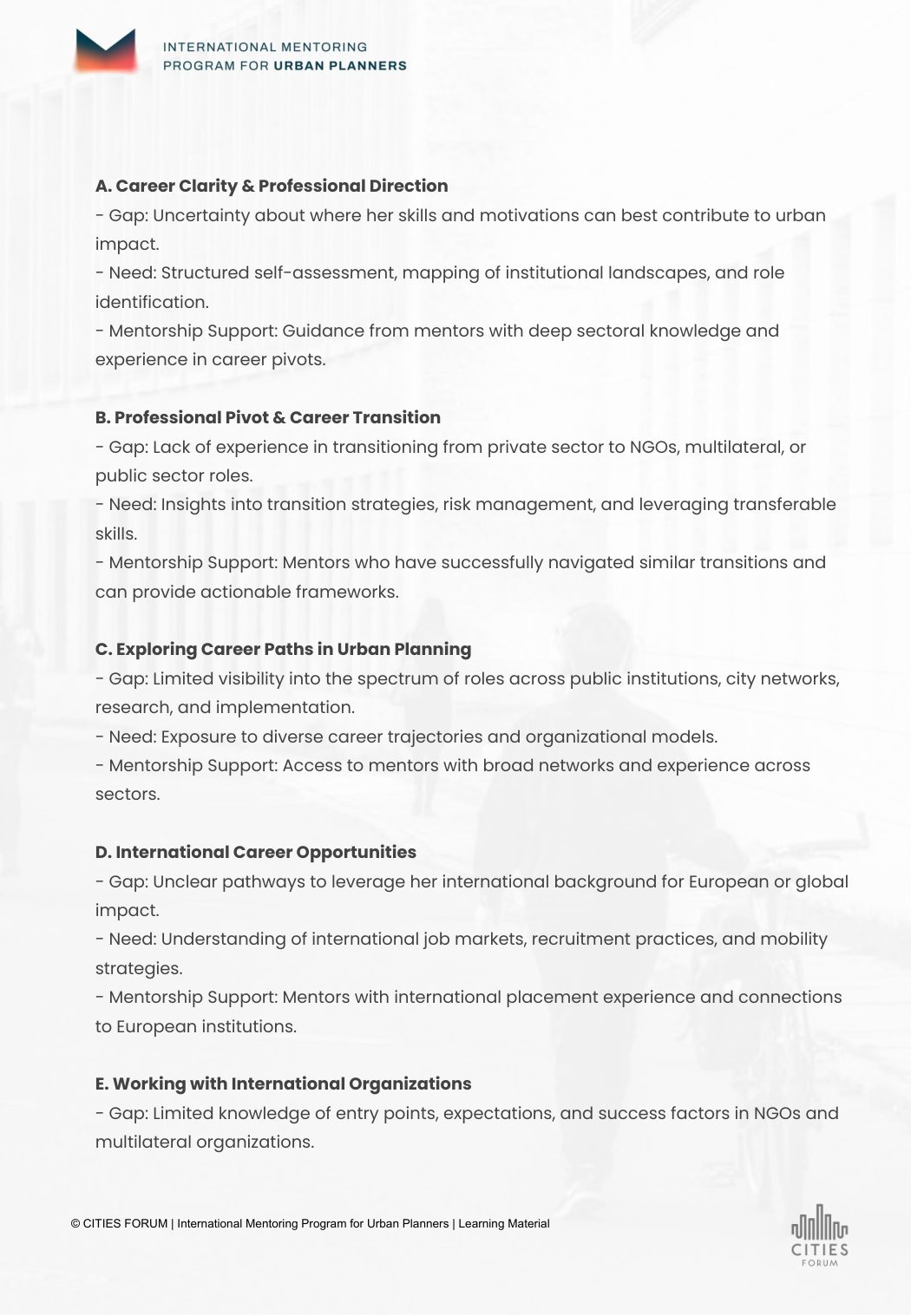
Personalised mentoring roadmap preview page 1
Personalised mentoring roadmap preview page 2
Personalised mentoring roadmap preview page 3

Personalised mentoring roadmap

  1. 1

    Starting point

    Career stage, background, challenges, aspirations.

  2. 2

    Discovery

    Clarify priorities and mentoring focus.

  3. 3

    Mentor selection

    Identify relevant mentors according to goals.

  4. 4

    Mentoring sessions

    Discuss, reflect, test ideas, receive guidance.

  5. 5

    Adjustment

    Refine focus as clarity increases.

  6. 6

    Strategic direction

    Leave with clearer positioning and next steps.

06 Modules

Five thematic modules structure the shared learning experience

These modules are not a rigid curriculum. They act as shared reference points that help mentees interpret their professional situation, prepare mentoring conversations and participate in collective discussions.

01

Career clarity and strategic planning

Helps mentees define professional direction, understand their current position and make more intentional career decisions.

identity goals direction career design
02

Emerging niches in urban planning

Explores new areas of opportunity: climate adaptation, sustainable mobility, digital urbanism, governance innovation and participatory approaches.

niches opportunity specialisation urban transitions
03

Skills for the urban planner of tomorrow

Transversal skills for complex urban environments: systems thinking, communication, collaboration, leadership and adaptability.

skills leadership collaboration adaptability
04

Professional visibility and global positioning

Supports mentees in communicating their value, building credibility and engaging with international professional ecosystems.

visibility networks positioning internationalisation
05

Productivity, growth and long-term impact

Managing time, energy, focus and resilience to build a sustainable and impactful professional trajectory.

productivity resilience prioritisation impact
08 Audience

Designed for different career stages and professional situations

The programme supports urban planners and city-related professionals at different moments of their career. It is especially relevant for participants navigating strategic questions about direction, specialisation, internationalisation, visibility or professional transition.

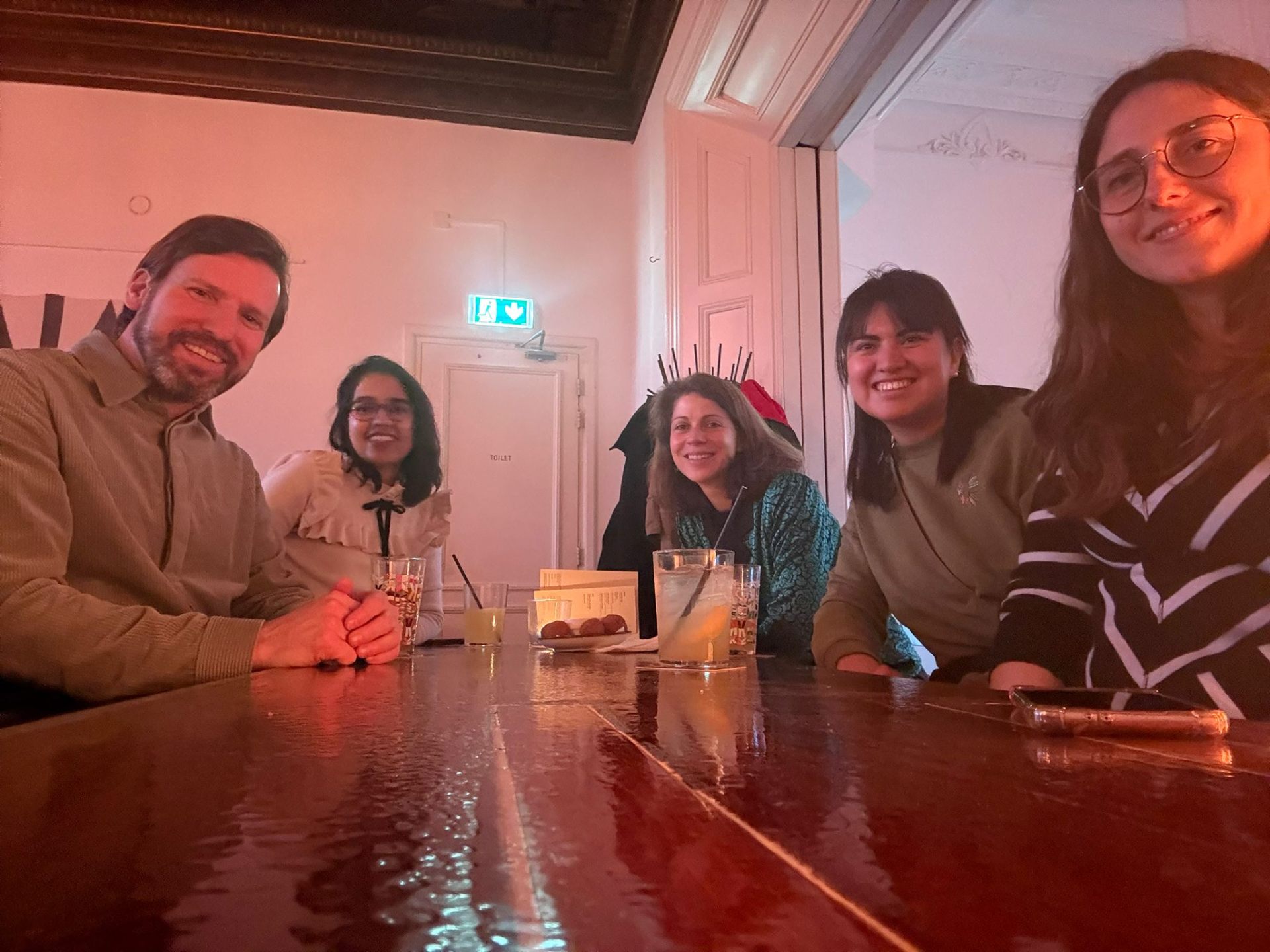
Mentoring programme participant 1
Mentoring programme participant 2
Mentoring programme participant 3
Mentoring programme participant 4
Real participants

Early-career urban planners

For professionals with limited practical exposure who need orientation, confidence and a clearer understanding of the urban planning ecosystem.

Mid-career professionals

For professionals with accumulated experience seeking repositioning, internationalisation, specialisation or leadership opportunities.

Transitioning or pivoting professionals

For professionals redefining their role, moving between sectors or geographies, or building a more coherent professional narrative.

09 Distinction

What makes this mentoring programme different?

Strategic orientation

Not casual advice. A structure designed to help urban planners build long-term professional agency.

International mentor pool

Mentors bring lived professional experience across sectors, institutions and geographies.

Personalised and adaptive architecture

Each mentee follows a pathway that evolves as their clarity, goals and priorities change.

Integrated learning ecosystem

Individual sessions, webinars, peer exchange, digital content and in-person encounters working together.

Ethical, human-centred mentoring

Grounded in trust, confidentiality, psychological safety and professional responsibility.

A guided journey towards clearer professional direction

The International Mentoring Program for Urban Planners helps participants move from fragmented experience, uncertainty or career stagnation towards a more intentional professional trajectory.

Through mentoring, reflection, peer exchange and international exposure, mentees gain the tools to understand where they are, where they want to go and how to position themselves within the evolving global urban planning ecosystem.

FAQ

Frequently asked questions

Is this a training course?
No. It is a mentoring-based professional development journey combining individual guidance, thematic content, webinars and community interaction.
Do all mentees follow the same path?
No. The programme has a shared structure, but each mentee follows a personalised roadmap based on their goals, background and priorities.
What is the role of the mentor?
Mentors provide experience-based guidance, strategic perspective and support for reflection. They do not make decisions for the mentee.
How do webinars fit into the journey?
Webinars provide collective reflection around transversal professional challenges and connect individual experiences with wider urban planning dynamics.
What should mentees expect at the end of the programme?
Greater clarity, stronger professional positioning, a better understanding of their next steps and meaningful connections within an international urban planning community.
For more information, write to mentoring@citiesforum.org